Good News! Three New Metro Lines to Open Today!

Good news! Guangzhou Metro Line 14 (first phrase), Line 21 (Zengcheng Square-Zhenlongxi) and Guangfo Line (Yanggang-Lijiao) will officially go into operation today, December 28th.

According to Guangzhou Metro, Line 14 and Line 21 are in operation from 2 p.m., while Guangfo Line starts running at 6 a.m. 

Good News! Three New Metro Lines to Open Today!

© Image | 广州地铁


This will bring the total mileage of metro lines in Guangzhou close to 500 kilometers, and the operating mileage will rank third in China and place the city in the world’s top ten. 

Line 14 

(first phase)

Good News! Three New Metro Lines to Open Today!

© Image | GDToday

  • Line 14 (first phase) will be the first Metro running in Conghua district,  connecting Dongfeng to Jiahewangang. 

  • After its opening, Guangzhou will begin a new chapter of “metro accesses to all districts. ” 

  • Meanwhile, Line 14 (first phase) is the first express service in Guangzhou.

Good News! Three New Metro Lines to Open Today!

© Image | 广州从化发布


Pricing 

10 RMB (Whole trip)

Schedule

Jiahewangang (interchange with Lines 2,3) 嘉禾望岗

6:00 a.m. (first train) to 

10:50p.m. (last train)

Dongfeng 东风

6:00 a.m. (first train) to 

10:35p.m. (last train)

Good News! Three New Metro Lines to Open Today!

© Image | GZMetro


Environment


Good News! Three New Metro Lines to Open Today!

© Image | GZMetro

Good News! Three New Metro Lines to Open Today!

© Image | GZMetro


Dongfeng

Good News! Three New Metro Lines to Open Today!

© Image | GZMetro

Conghua Coach Terminal

Good News! Three New Metro Lines to Open Today!

© Image | GZMetro

Line 21 

(Zengcheng square – Zhenlongxi section) 增城广场-镇龙西

Good News! Three New Metro Lines to Open Today!

© Image | 增城日报


  • Zengcheng Square station is decorated in red and green, the color of lychees, the most famous fruit in Zengcheng. 

  • In addition, the entrance has been equipped with two “face-scanning” machine, it is likely that passengers can enter the station simply by scanning their face in the future, however, this equipment is still under testing.

“Face-scanning” machineGood News! Three New Metro Lines to Open Today!

Good News! Three New Metro Lines to Open Today!

© Image | 掌中广视

Pricing 

7 RMB (Whole trip)

Schedule

Zengcheng 

Square 增城广场

6:00 a.m. ( first train) to 

10:35 p.m. (last train)

Zhenlongxi 镇龙西

6:10 a.m. (first train) to 

10:55 p.m. (last train)


Environment


Dongfeng

Good News! Three New Metro Lines to Open Today!

© Image | 增城日报


Good News! Three New Metro Lines to Open Today!

© Image | 掌中广视

Guangfo Line 

(Yangang – Lijiao section)

燕岗-沥滘部分

Good News! Three New Metro Lines to Open Today!

© Image | 广州参考

  • There are four stations in the new section, Yangang, Shixi, Nnzhou, and Lijiao. The Shixi – Lijiao section covers a total length of 5.4 km. 

  • All the stations are equipped with bathrooms and a public baby diaper changing station.

  • Nanzhou and Lijiao are both transfer stations. You can transfer to line 2 at Nanzhou and line 3 at Lijiao. 

Pricing 

8 RMB (Whole trip)

Yangang  to Lijiao: 3 RMB


Schedule

Lijiao 沥滘

6:00 a.m. ( first train) to 

11:00 p.m. (last train)

Xinchengdong 新城东

6:00 a.m. (first train) to 

10:30 p.m. (last train)

Good News! Three New Metro Lines to Open Today!

© Image | 广州参考

Watch Out! Your Alipay / WeChat Account Will Be Monitored!

Recently, news about “third-party payment of personal transactions over RMB 30,000, transfer of more than RMB 200,000 or being monitored” has been circulating on the internet. Is this news true?

Watch Out! Your Alipay / WeChat Account Will Be Monitored!

© Image | gov.cn


According to the notice from the central bank, actually it means that large and abnormal transactions in personal/company accounts will be subject to central bank monitoring and management. 


Among them, not only the bank account income and expenditure, online bank revenue and expenditure records, but also the records of non-bank payment institutions such as Alipay and WeChat payment. 

The following situations 

are large transactions

1

Cash receipts and payments on a single or cumulative transaction amount of RMB 50,000 or more and foreign currency equivalent of USD 10,000 or more.

2

Payments for non-natural person clients’ payment accounts and other accounts on the date of single or cumulative transaction amount of RMB 2 million or more and foreign currency equivalents of USD 200,000 or more.

3

Transfer of domestic funds by natural person clients’ payment accounts and other accounts on the date of single or cumulative transaction amount of RMB 500,000 or more and foreign currency equivalent of USD 100,000 or more.

4

Cross-border payment of single or cumulative transaction amount of RMB 200,000 or more  and foreign currency equivalent of US$10,000 or more on the date of the payment of the natural person’s client’s payment account and other bank accounts.

Watch Out! Your Alipay / WeChat Account Will Be Monitored!

© Image | 新浪财经

The reporting obligations of large-value transactions are performed by financial institutions, companies and individuals do not need to perform additional reporting procedures.

What is the purpose of doing this?


The official notice pointed out that this is to further improve the working mechanism of large-value transactions and suspicious transaction reporting, and improve the effectiveness of fund monitoring.

Watch Out! Your Alipay / WeChat Account Will Be Monitored!

© Image | 新浪财经

Some analysts also admit that these regulations are mainly to prevent money laundering and illegal financing, so there is no impact on ordinary users and non-bank payment institutions. The most affected are criminals who use third-party payment agencies to conduct money laundering.

Alipay makes an explanation via Weibo

Watch Out! Your Alipay / WeChat Account Will Be Monitored!


“This document is aimed at anti-money laundering. If the cash transaction exceeds RMB 50,000 in one day, it must be reported (Alipay has no cash transactions). It need be reported afterwards if the transaction is particularly large, RMB 500,000/day. This has been implemented in the banking system for many years.”

Watch Out! Your Alipay / WeChat Account Will Be Monitored!

© Image | ZDNET


Therefore, whether it is a third-party payment institution such as Alipay or WeChat payment, or has already implemented the prescribed banks, insurance companies and brokerages, etc., submitting large-value transaction reports according to regulations will not have an impact on conduct business, investment, personal consumption and other activities.

Suspicious transactions 

should be avoided


Individual

(1) In the short term, the funds are diversified, transferred, or transferred in a concentrated manner;

(2) Frequent fund collection and payment within the short term of the same payer;

(3) The long-term idle account is suddenly activated, and a large amount of funds are received and paid in a short period of time;

(4) The amount, frequency and use of cash access are obviously inconsistent with normal cash receipts and payments;

(5) The settlement of personal bank account accumulates more than 1 million yuan in cash in a short period of time;

(6) Frequent account opening and cancellation, and always a large amount of funds will be collected and paid before the account closed;

(7) Try to evade monitoring of large-value payment transactions;

(8) Other suspicious payment transactions as prescribed by the People’s Bank of China;

(9) Other suspicious payment transactions that the financial institution has determined to be considered. Note: In practice, financial institutions judge according to their own specified conditions or standards.

Enterprise

(1) The frequency and amount of funds received and paid are obviously inconsistent with the scale of business operations;

(2) The flow of funds receipt and payment is obviously inconsistent with the business scope of the enterprise;

(3) The daily collection and payment of the enterprise is obviously inconsistent with the characteristics of the business operation;

(4) The cyclical occurrence of large amounts of funds received and paid is obviously inconsistent with the nature of the enterprise and the characteristics of the business;

(5) Frequently collect personal remittances from individuals that are not significantly related to their business operations in the short term;

(6) The business dealings with customers in areas with serious drug trafficking, smuggling and terrorist activities have increased significantly, and funds are frequently paid in the short term.

First Bikes, Now Cars: Shared Wheels Deflate!

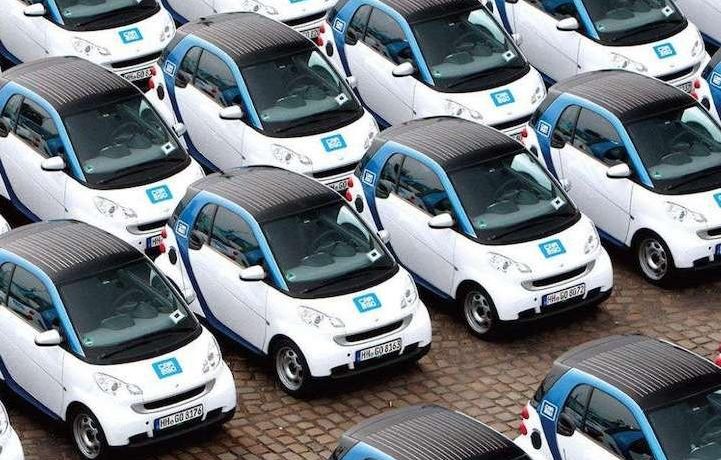
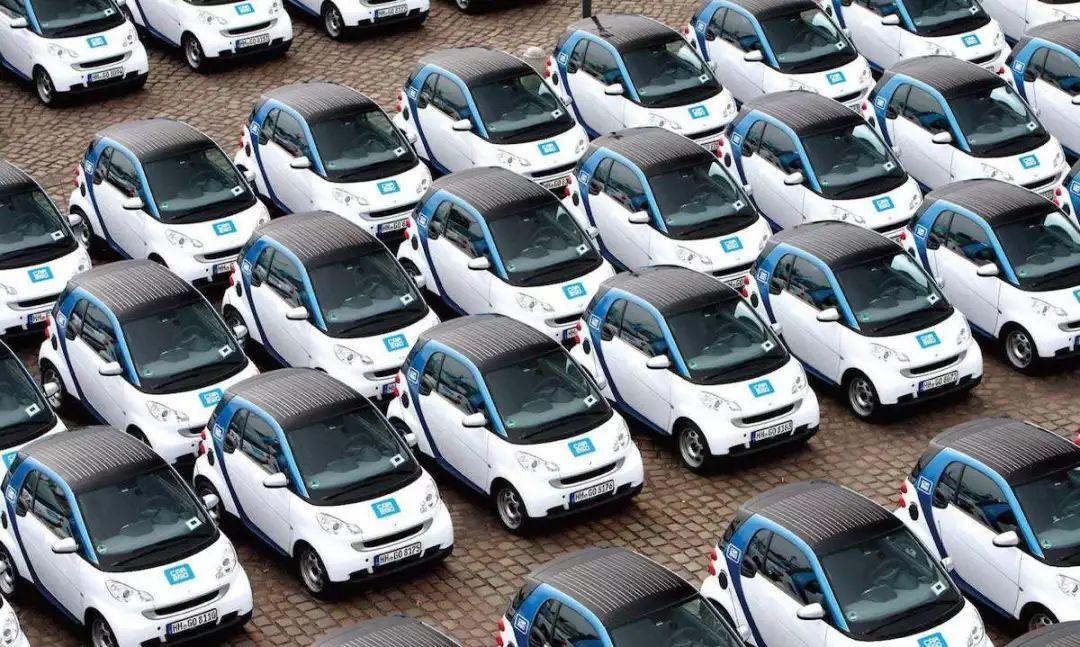
Chinese car-sharing companies, which allow consumers to rent vehicles for a short period, are facing cash-flow pressure as income trails the high cost of fleet operation and maintenance.

First Bikes, Now Cars: Shared Wheels Deflate!

© Image | IC


Failure to return individual

 deposits of 1,500 yuan


Among them, Beijing-based Togo is facing a crisis amid consumer complaints about the company’s failure to return individual deposits of 1,500 yuan (US$218).

Togo’s problems happened not long after Beijing-based bike-sharing company ofo ran into similar problems. It’s said to owe deposit refunds to more than 10 million users and also hasn’t paid many of its suppliers.

First Bikes, Now Cars: Shared Wheels Deflate! Have You Get Ofo Deposit Refund? 10 Million Users Waiting!

Car and bike sharing firms were the darling of investors and users when they started a few years back. They were seen filling a gap by providing cheaper, convenient mobility in a way helped ease traffic congestion and pollution.

The concept drew hundreds of companies into the sharing sector, creating competition that weaker players couldn’t withstand. Simply put, there were road bumps to the fast, prolific growth of companies wanting a piece of the action.

“Most of companies in car-sharing are losing money, not just the startups,” said Zhang Xiaofeng, an independent market analyst. “Many big companies haven’t made profits yet. There are many reasons, including high parking fees for shared cars, especially for core areas in big cities, labor costs, high maintenance fees and too many discount coupons to attract new users.”

Togo, founded in July 2015, provided Mercedes-Benz Smart and Roewe e550 cars in Beijing, Shanghai, Guangzhou and other cities. The company said it has nearly 10,000 shared cars in China.

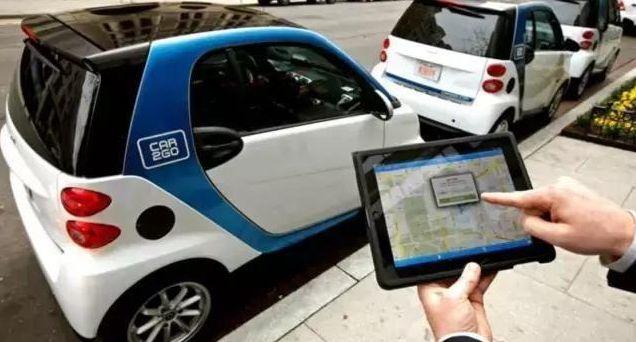
Users of car-sharing programs check the availability of vehicles through mobile apps. Once a car is selected, it can be unlocked via smartphone. Payment is made online. But they have to pay a deposit of 1,500 yuan before renting a car on the Togo platform and are told it takes more than 20 days to get the money refunded.

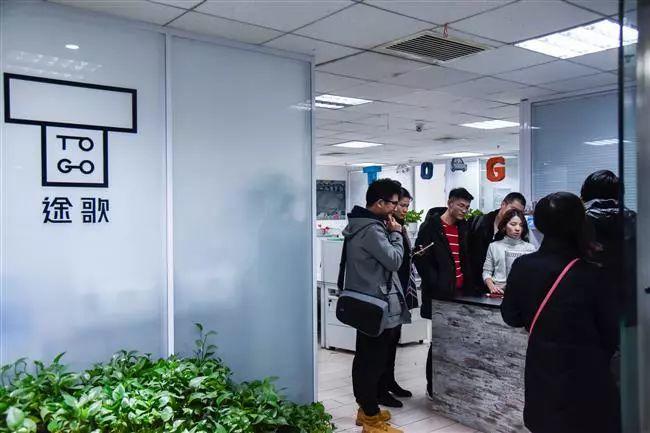
Last week, Togo users queued outside the company’s headquarters in Beijing to demand their money back.

First Bikes, Now Cars: Shared Wheels Deflate!

© Image | IC

A Beijing resident surnamed Wang said he began using Togo in August and applied for a refund of his deposit in early November. He’s still waiting. Wang said he repeatedly phoned the company but has yet to see the refund. 

After registering at Togo’s Beijing headquarters, Wang was told he wouldn’t get his money until late March.

On its official social media account, Togo pledged to give timely updates on the refund process. It also said it will try to speed up payments and urged users to be patient.

Not the first time car-sharing operators

 have run into problems.

Beijing-based operator Ezzy suspended service in October 2017, leaving users clamoring to get their deposits back. Local media reported the company was unable to get a new round of funding and suffered from low operational efficiency.

Last March, Beijing car-sharing company UU Cars ceased operation when investment funds it was earlier pledged didn’t materialize on schedule.

Industry analysts said that a sector that once looked so promising is falling into the slow lane.

First Bikes, Now Cars: Shared Wheels Deflate!

© Image | IC

There are already more than 300 car-sharing operators in China and the sector is expected to grow more than 50 percent a year over the next five years, according to an study by PwC’s Strategy&.

The number of shared cars in China, which totaled about 30,000 at the beginning of 2016, is expected to reach 170,000 by 2020, the consulting firm said.

Still, car-sharing operators need to address the high cost of operation. At present, each car is running at a loss of 50 yuan to 120 yuan a day, PwC’s Strategy& said.

Analyst Zhang said the frequency of consumers driving shared cars is a major headache in the sector.

People tend to use cars in peak commute times, leaving the cars idle for the rest of the day. The utilization rate is just not enough to cover costs.

“Car-sharing companies can’t make profits if only one or two people use their shared cars,” Zhang said. “The utilization rate is important, and for now, most of the companies are struggling to increase that rate as well as market share.”

Trademark Online Service System Is Fully Launched Now!

The online trademark service system was launched online, online application, online publication, online announcement and online payment. The trademark registration certificate publicizes six functions in one, which can provide a full range of full-process services for the public. 

Just scan the QR code on the trademark registration certificate, you can enter the trademark registration certificate publicity system to check its content and effectiveness.

Trademark Online Service System Is Fully Launched Now!

On November 26, 2018, the State Intellectual Property Office held a comprehensive online launching ceremony for the trademark online service system at the China Trademark Building.

According to the notice from the State Intellectual Property Office (Mainland China), from December 2018, the paper version of the trademark registration certificate will no longer be printed. The trademark applicants please know about this new rule!

#Reference for the new and old trademark certificate:

Old version of 

paper trademark certificate

Trademark Online Service System Is Fully Launched Now!

New version of 

electronic trademark certificate

Trademark Online Service System Is Fully Launched Now!

Electronic trademark 

registration certificate

Trademark Online Service System Is Fully Launched Now!

The State Intellectual Property Office continued to promote the reform of trademark registration facilitation, aiming at 

  • Realizing trademark registration facilitation, 

  • Improving trademark informatization level, 

  • Improving trademark review mechanism, 

  • Simplifying procedures optimization process, 

  • Expanding trademark application channels as means to effectively deal with trademark registration in China. 

With the rapid growth of applications, the review cycle will be further shortened to meet the needs of entrepreneurial innovation and further optimize the business environment.

On November 27, 2018, the trademark online service system was fully operational. Applicants can directly handle 24 trademark transactions including Madrid International Registration through the login system, and receive all 112 trademark documents including trademark electronic registration certificates.