Thx, Phillip!

Five people in southwestern China have a brighter future after receiving organs donated by the family of a young Australian man who died last month, according to a local media report.

Thx, Phillip!


Phillip Hancock, a 27-year-old who had worked for several years as an English teacher at Xinan University in Chongqing, died on May 9 from complications related to Type 1 diabetes, a week after falling into a coma, Beijing Youth Daily reported on Thursday, citing a WeChat post by his mother.


Thx, Phillip!


According to his father, Hancock had always been an advocate for organ donation, so when it became clear he was not going to pull through his parents made inquiries into how they could make his final wish come true.


Thx, Phillip!

After speaking to officials from the Australian embassy and the relevant Chinese authorities, it was agreed that their son, on his death, would donate his corneas, liver, kidneys, heart, and lungs.


While doctors could not find a recipient for his heart and lungs, Hancock’s other organs were transplanted the day he died, making him Chongqing’s first foreign donor – and China’s seventh.

Thx, Phillip!


A 30-year-old woman and a 40-year-old man were the recipients of Hancock’s kidneys. They are both now recovering in hospital after their respective operations went smoothly, the newspaper report said.


A 40-year-old man who was the recipient of Hancock’s liver is also in a stable condition and out of intensive care, while the two people who received cornea transplants have already been discharged from the hospital, the report said.


One of Hancock’s former students, Li Chin, described him as a good friend who had a passion for music.


Thx, Phillip!

Thank you, Phillip. 


Thx, Phillip!

“Super Fungus” Broke Out! 18 Cases Confirmed In China.

Recently, a multi-drug resistant fungus called Candida auris has erupted in many places of the world. On April 8, according to China News Weekly, 18 cases of clinical infections of super fungi have been confirmed in China while 587 confirmed cases in the U.S. 


The epidemic is currently under continuous surveillance, but there is no overall epidemic infection.

A Mortality Rate of up to 60%

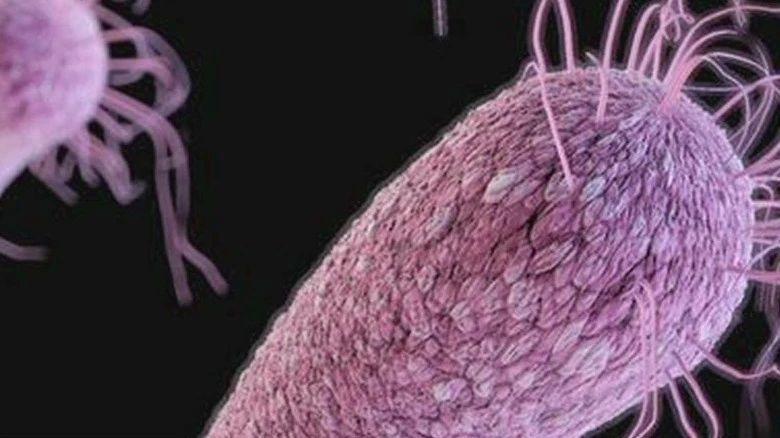
Under the microscope, Candida albicans is not significantly different from other Candida species, but usually has multi-drug resistance, and some strains are highly resistant to the three major antifungal drugs commonly used in clinical practice.

According to The New York Times, 

C. auris is so tenacious, in part, because it is impervious to major antifungal medications, making it a new example of one of the world’s most intractable health threats: the rise of drug-resistant infections.

This superfungi is most deadly to people with immature or compromised immune systems, including newborns and the elderly, smokers, diabetics, and patients with autoimmune diseases.

 

The symptoms — fever, aches and fatigue — are seemingly ordinary, but when a person gets infected, particularly someone already unhealthy, such commonplace symptoms can be fatal.

The source of Candida auris is currently unclear. It is generally believed that this is a newly evolved new species that quickly adapts to the human host environment, mainly causing blood infections with a mortality rate of up to 60%!

50% of Infected People Have Died within 90 Days

According to the latest report from the Centers for Disease Control and Prevention (CDC) official website, the number of infected cases in the United States has risen to 587, and nearly 50% of infected people have died within 90 days.

 

According to the New York Times, last May, an elderly man was admitted to the Brooklyn branch of Mount Sinai Hospital for abdominal surgery. A blood test revealed that he was infected with a newly discovered fungus as deadly as it was mysterious. Doctors swiftly isolated him in the intensive care unit and the man eventually died after 90 days in hospital.

Tests showed it was everywhere in his room at that time, so invasive that the hospital needed special cleaning equipment and had to rip out some of the ceiling and floor tiles to eradicate it.
 

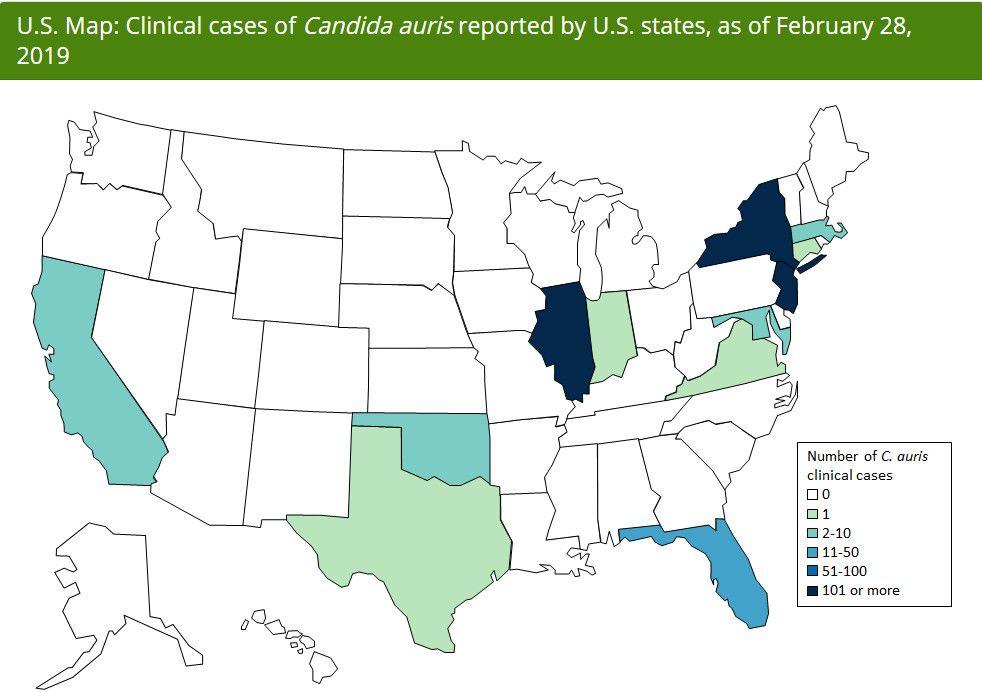
But the deadly fungus survived. According to the C.D.C, in the United States, 587 cases of people having contracted C. auris have been reported, concentrated with 

  • 309 in New York, 

  • 104 in New Jersey,

  • 144 in Illinois.

Image | CDC

Many Countries Have Been Spreaded

According to the US Centers for Disease Control and Prevention, by March 29, 2019, there were 617 cases of Candida albicans infection worldwide.
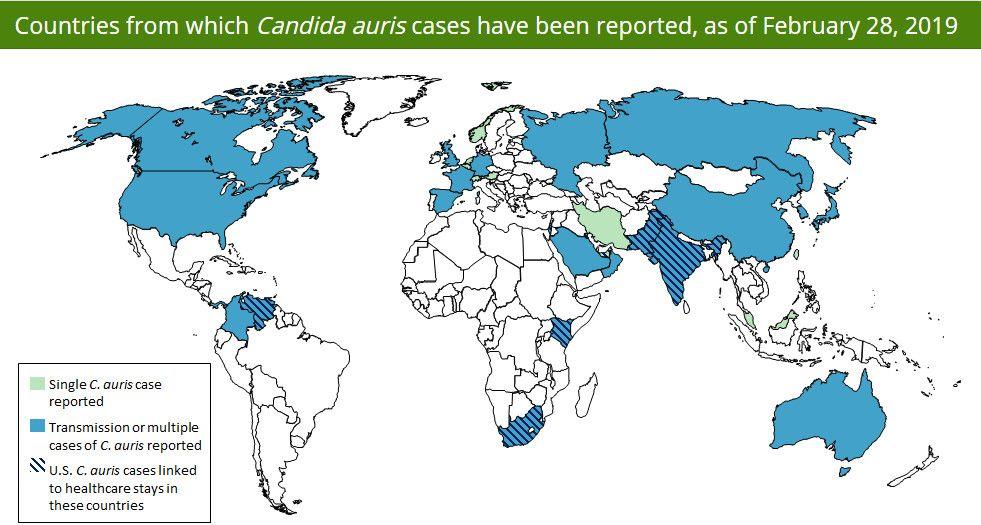
 

It is reported that in 2009, Candida albicans was first discovered in the external auditory canal secretion of a Japanese patient. It can be isolated from 

  • Skin (very common), 

  • Genitourinary tract (ordinary), 

  • Respiratory tract, 

  • etc. 


Leading to invasive infections such as candida bacteremia, pericarditis, urinary tract infections and pneumonia.

Source of the Super Fungus 


It began in 2009, when doctors in Tokyo swabbed the ear of a 70-year-old woman and found an unknown strain of fungus that can infect humans and, in severe cases, cause a blood infection in high-risk patients.

Over the last five years, it has hit a neonatal unit in Venezuela, swept through a hospital in Spain, forced a prestigious British medical center to shut down its intensive care unit, and taken root in India, Pakistan and South Africa.

How Should We Prevent?

This kind of fungus will not have much impact on the average person. It mainly occurs in hospitals, such as ICU and other places, so the mortality rate is high. People with normal immunity will not be infected daily.

1. Strictly observe the standard precautions. To wash your hands with running water and soap, and then disinfect your hands with quick-drying hand disinfectant.

2. Personal protective equipment such as gloves and aprons. If there is contact with the patient’s skin or the patient’s blood, body fluids, should wear a gown.

3. Personal protective equipment should be worn after washing hands, entering the room or patient area, and taken off and discarded in the patient’s room. Wash hands thoroughly and wipe hands with quick-drying hand sanitizer before leaving.

4. Goggles and masks are only required to be worn when there is a risk of spillage.

5. Patients and visitors need to be aware of infection prevention measures, including hand hygiene and how to use aprons.

6. To use disposable items, such as sphygmomanometer cuffs, pillows, etc., especially during the outbreak.

4 Fingers Were Gone after Strong Wind! Careful!

Four fingers were gone and throat slashed after a gale. Please be careful when you encounter this kind of circumstance.

4 Fingers Were Gone after Strong Wind! Careful!

© Image | 江苏公共

1

On April 9th, two men were flying a giant kite in an open space. Suddenly, a strong wind is unexpectedly coming. So they two began to collect string. Unpredictably, the things were not as usual.


4 Fingers Were Gone after Strong Wind! Careful!

© Image | Google

“When I collect half of the string, suddenly the wind is too strong, which wrapped in the hand, I am directly pulled up by it!” a man said, this string is about 2 mm and looks like a sharp knife when it is caught in the wind.

At this split moment, four fingers were fractured, and his partner’s half of the palm was broken at the same time. They both bleed profusely.

“When the patient comes in, the second to fifth fingers are severed, although the third finger is attached (just to the bone). All the blood vessels, nerves, tendons are severed.” the doctor said.


4 Fingers Were Gone after Strong Wind! Careful!

© Image | 江苏公共

After 16 hours of treatment, the severed fingers and palms of the two patients were finally connected.

2

A similar accident happened not long ago.

A 4-year-old child hit kite string accidentally when she was running, then her throat was cut suddenly. It’s super dangerous and even endangers the safety of her life.


4 Fingers Were Gone after Strong Wind! Careful!

© Image | 鲁中晨报

Luckily, what she encountered was a still string. If the man who flies this kite loosen the string quickly, she may be not so lucky.

4 Fingers Were Gone after Strong Wind! Careful!

© Image | Google


There was a calculation made by the media. Supposed a man with a weight of 50 kg rides a motorcycle forward, the speed is 10 meters per second, the contact time between his head or face and the kite string is 1 second. 


If F=500n, the pressure at this time 5107 pascals, which is equivalent to the pressure of vegetables when cutting vegetables with a knife!


4 Fingers Were Gone after Strong Wind! Careful!

© Image | Google

Therefore, you should:

  • Slow Down


If you see a man is flying kite nearby, please be careful. Cyclists would better slow down your speed, or push it for some time. As for pedestrians, you’d better do not run. Once your body contact with kite string, get out of it to the opposite direction quickly.


Try to avoid neck, face and fingers contact with the kite string.


  • Stay Away


Because the kite string may be entangled in you because of the sudden change of wind direction, do not walk in front of the person flying the kite, so it is easy to be intercepted by the kite line.


Do not let kite string become the dangerous cutthroat rope.


4 Fingers Were Gone after Strong Wind! Careful!

Guide of the 125th Canton Fair!

Getting your Buyer Card via Online Pre-application is your option. The Buyer card is the only official admission to Canton Fair.

Guide of the 125th Canton Fair!


Attention


If you have got a Buyer card, please pay attention to the following information: 

The Badge is valid for multiple sessions of the Fair, which ensures your entrance to the Fair directly and saves your time with easy access. 

Guide of the 125th Canton Fair!

If you forgot to bring or lose it, re-application will cost you 200 RMB/card as a service fee. The previous badge will be invalid right after re-application, please ensure the badge you wear is the newest.

How

The registration peak hour usually occurs at 9:30 am to 12:00 am on April 15, April 23, May 1 (Spring session) and October 15, October 23, November 1 (Autumn session). To save your time queuing up at the fairground, three ways to register are recommended:

Guide of the 125th Canton Fair!

  • Pre-apply for the buyer card through pre-apply buyer badge on Canton Fair’s official website, before getting your card at the Overseas Buyers’ Registration Offices.

  • Please get your Entry Card at appointed hotels in Guangzhou and nearby area. (More detailed information about appointed hotel in GZ, please click Canton Fair’s official website)

  • Please get your Entry Card at  Canton Fair Hong Kong Representative Office.

When&Where

Canton Fair has held two sessions a year; one is in Spring, the other in Autumn. And every session is separated into 3 phases.

Phase I

    Apr./Oct.14, 10:30-18:00

    Apr./Oct. 15-18,  8:30-18:00

    Apr. /Oct.19,  8:30-16:00

Phase II

    Apr./Oct. 23-26,  8:30-18:00

    Apr. /Oct.27,  8:30-16:00

Phase III

    In Spring: May 1-4, 8:30-18:00,May 5, 8:30-14:00

    In Autumn: Oct. 31-Nov.3, 8:30-18:00, Nov. 4, 8:30-14:00


  • Four Overseas Buyers’ Registration Offices set up in China Import and Export Fair Complex:


Guide of the 125th Canton Fair!

  • Canton Fair Hong Kong Representative Office


Opening Hours: Monday to Friday 10 am to 12:30 pm & 2 pm to 5 pm; Closed on Saturday, Sunday and in Hong Kong Public Holidays 

The Brief Flow Chart of Overseas Buyers’ Registration Centers in the Fair Complex.

Guide of the 125th Canton Fair!

Layout

Guide of the 125th Canton Fair!

Wholesales Market


Guide of the 125th Canton Fair!


Welcome to join us!

Share to let your friends know!

Guide of the 125th Canton Fair!

SOURCE |Official Canton Fair website

?These Articles May Help You
Guide of the 125th Canton Fair! Guidelines: Transfer Money Overseas Via Alipay!
Guide of the 125th Canton Fair! RMB With These Numbers Are All Fake! Pay Attention!
Guide of the 125th Canton Fair! How Much Money Can I Bring When Entering China?